Two trainings.
Today I breathe gently.What breathwork sets off in the body, where the limit is, and why that isn't caution but experience.
Fast breathing reliably takes you into altered states. That's why it's offered everywhere. If you know what happens in the body, it's a powerful experience. If you don't, it's a fright.
Cleansing ritual. CHF 40 to 120 per session. Cramped hands are normal, so is dizziness.
In short.
Breathwork is breathing practice that deliberately brings on an altered state. The best-known forms: holotropic breathing, conscious connected breathing, the Wim Hof method.
What they share is fast, deep breathing over a longer time. The body responds in measurable ways. And that very response is what you experience as the experience.
Two curves, one limit.
The intense form takes you within minutes into a state you don't know. The gentle form stays below the limit. Both are breathwork. The question isn't how deep you get. The question is who brings you back.
- Holotropic, connected breathing: big swing, 60 to 75 minutes
- Cramped hands are normal: carbon dioxide drops, the blood turns alkaline
- The gentle form: small swing, how I breathe today
- Bringing back: the craft, not the state
What exactly it is.
I did two breathwork trainings. Today I breathe with people almost only gently. I'll tell you why in a moment. First, what it is.
Breathwork is breathing practice in which changed breathing takes you into a different state of consciousness. The most common forms: holotropic breathing, developed in the seventies as a way in without a substance. Conscious connected breathing, with no pause between in-breath and out-breath. And the Wim Hof method, with cycles of fast breathing and breath holding.
What they all share is what happens in the blood: fast breathing lowers carbon dioxide. The pH rises, the vessels in the brain narrow, free calcium drops. The results: tingling, dizziness, warmth, and in stronger form the hands and feet cramp so you can't move anymore. It's harmless and goes away on its own as soon as you breathe more calmly. Anyone who doesn't know that gets the fright of their life. And that's exactly the point.
A state arrives quickly. Bringing people back is the craft.
How it runs.
Four forms you'll come across. The first three create a high. The fourth doesn't, and that's the one I do today.
Holotropic breathing
Stanislav and Christina Grof, the seventies, developed as a way in without a substance after LSD was banned. Two to three hours of fast breathing to loud music, in pairs, with a companion who sits.
Conscious Connected Breathing
Also called rebirthing. Breathing continuously, no pause between in-breath and out-breath, mostly lying down, often for more than an hour.
The Wim Hof method
Cycles of thirty to forty fast breaths, then holding the breath. Often combined with cold.
The gentle form
Slow and calm, about six breaths a minute. No high. Measurably calms the autonomic nervous system. That's the form I use today, built into a single move.
A state arrives quickly. Bringing people back is the craft.
What you need to be clear about.
Questions before your first breathwork session.
Three for the person leading, one for you. A sentence is an answer, ten minutes aren't.
- "What happens if my hands cramp?"
- "How do you bring people back?"
- "How many people sit with how many lying down?"
A sentence is an answer. Ten minutes aren't.
The five questions that apply to any leader have their own page: Look closely. Ask.
Not with epilepsy, cardiovascular disease, high blood pressure, aneurysm, detached retina, glaucoma, osteoporosis, during pregnancy, and not with psychosis, bipolar disorder or acute mental health crises. Never in or near water: anyone who hyperventilates before diving can black out underwater, and people have died that way. With the strong forms there's the added risk that old things come up and nobody with experience sits beside you. If in doubt, talk to your doctor beforehand, not the course leader.
And afterwards?
After a strong session your body needs rest, water, something to eat. Don't drive straight away. What came up keeps working for several days, and that can feel restless without anything going wrong.
If it overwhelms you, talk to someone who listens without interpreting.
Staying calm is the real qualification.
Common questions.
Who writes this.
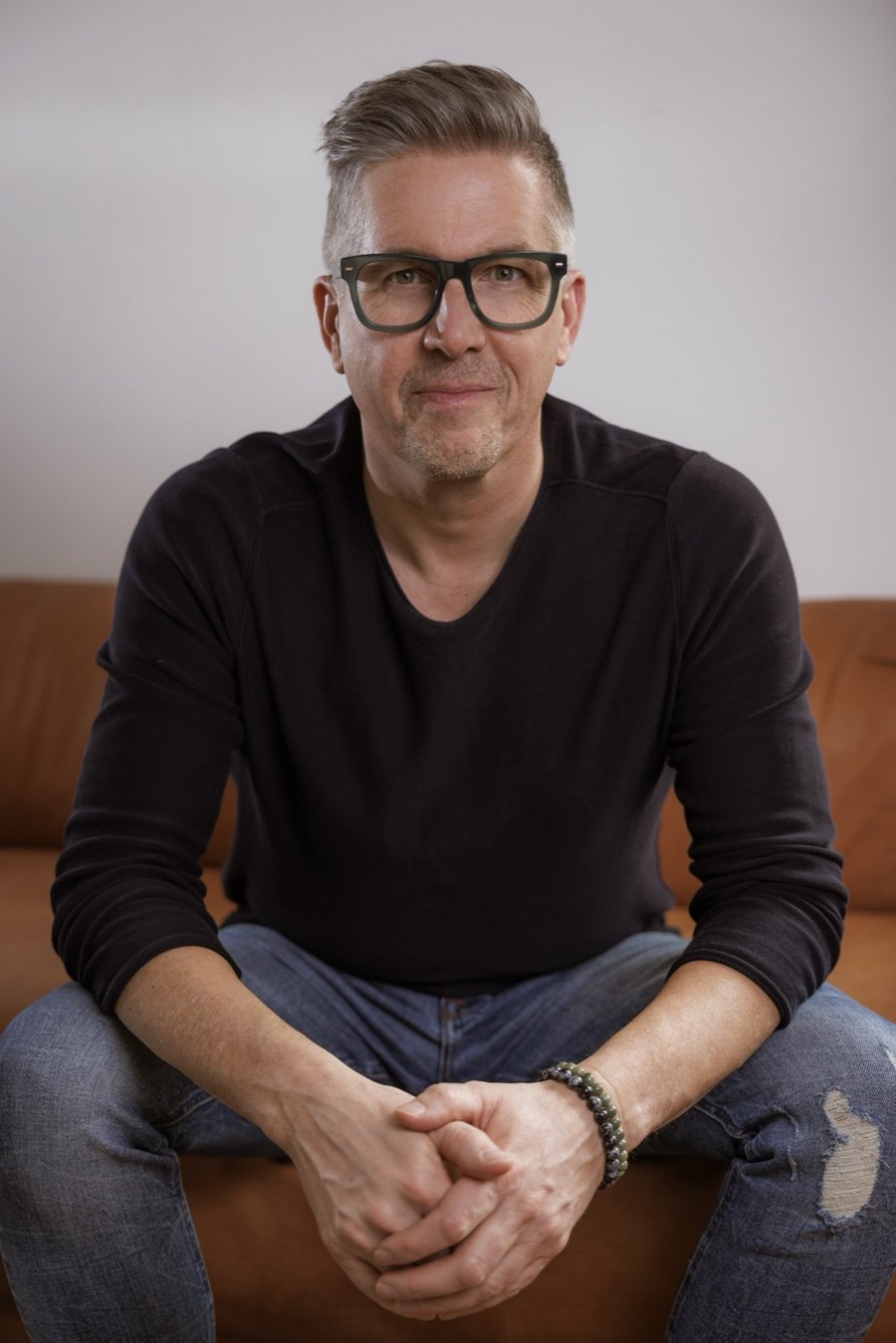
Around a hundred workshops with different teachers, two breathwork trainings, many years as a student of indigenous shamans in North America and Mongolia and of a teacher in the Moroccan desert. He has guided around two thousand people through rituals, safely in and safely back out.
Only what he knows from the inside is written here.
My intention with these pages: I share my knowledge so you can find the difference yourself. Between shamanic bullshit and something truly special.
Staying calmis the real qualification.
You can see whether a workshop leader has a certain calm. Pay attention to it, because you want to be safe in this ritual. Whoever panics the moment something unexpected happens can't think anymore, and then you're on your own.
See the mentoring